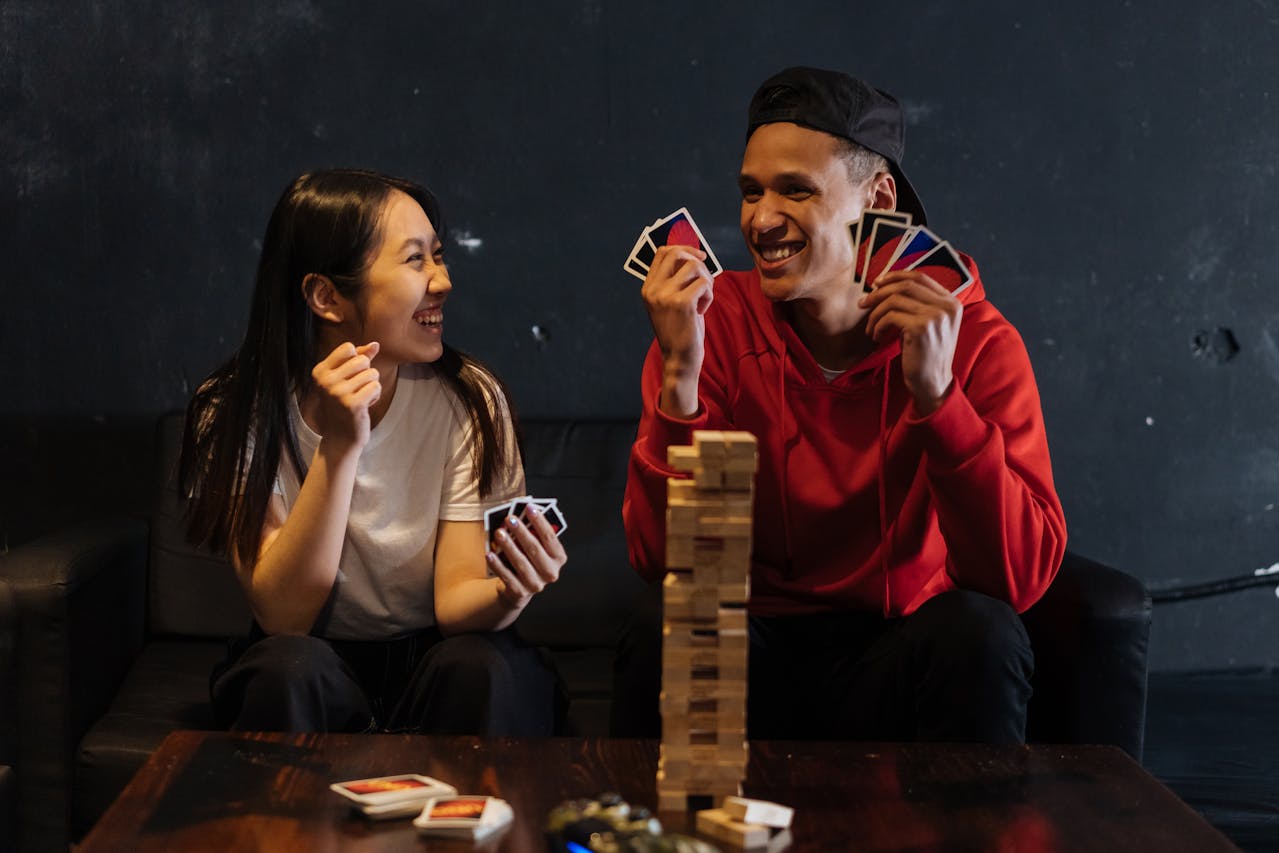
Planning a party for kids can be both exciting and overwhelming. The key to a successful kids’ party is choosing the right games that are not only fun but also easy to play. In this guide, we’ll explore the best party games for kids that will keep them entertained and engaged throughout the event. Let’s dive in!
Top 5 Best Party Games for Kids
Following is the list of the top 5 party games for kids.
1. Super Skills
Super Skills is an engaging and competitive board game. It enhances children’s physical and mental abilities through fun challenges. This game encourages kids to develop essential skills while enjoying quality time with family and friends.
It offers a variety of challenges for both girls and boys. It can be played indoors or outdoors and is perfect for family nights, group games, or team building. The game includes 120 challenge cards, 10 cups, 5 balls, 4 dice, chopsticks, a blindfold, a sand timer, rope, a scoreboard, and a dry-erase marker.
Super Skills can be played in various formats, such as individual challenges or team-based activities. It promotes teamwork and physical fitness while being entertaining.
The game consists of various challenge cards that encourage players to perform tasks, a game board for navigation, and colorful tokens representing each player. It features simple gameplay that keeps everyone involved and excited.

Pros:
- Super Skills promotes physical activity and skill development enjoyably.
- It can be played with the included materials. Therefore, it is easy to set up.
- Engages children in physical challenges.
- It promotes healthy competition.
Cons:
- Some preparation may be needed before starting the game, depending on the activities chosen.
- Less active Children may find some challenges more difficult.
How to Play:
- Divide Kids into Teams.
- Place the game and shuffle the challenge cards.
- Each team/player selects a game piece and places it at the starting point on the board.
- Players take turns rolling the dice and moving their pieces around the board.
- When landing on a challenge space, players draw a challenge card and must complete the task described on the card.
- The first player or team to complete all challenges and reach the finish line wins the game!
2. What Do You Meme?
It is a hilarious party game that challenges players to create the funniest captions for memes. It’s a modern twist on classic party games. This game is ideal for older kids and teens. This game encourages creativity and humor while providing endless laughs.
The game features meme cards with popular and funny images. Caption cards for humorous phrases, and clear instructions for setting up and playing. It allows players to engage in creative thinking.

Pros:
- Promotes creativity and humor.
- Perfect for older kids and family gatherings.
- The game develops social interaction and laughter.
- Ideal for breaking the ice at gatherings.
- Perfect for a small group or a larger party.
Cons:
- May include humor that is not suitable for younger children, so adult supervision is recommended.
Buy What Do You Meme on Amazon
How to Play:
- Shuffle the meme cards and place them face up in the center of the playing area.
- Each player shareout a certain number of caption cards (usually seven).
- Nominate one player as the judge for the round.
- Players take turns being the judge, who picks a photo card from the deck.
- The other players choose the funniest caption card from their hand to match the meme.
- The judge reads the captions aloud and selects the funniest one. The winning player gets a point.
- Rotate the judge role and continue until a player reaches a set number of points.
3. Simon Says
Simon Says is a classic kid’s game that has stood the test of time. It’s an excellent way to promote listening skills, quick thinking, and physical activity among kids.
The game is simple yet effective, making it perfect for parties or family gatherings. Players must pay close attention to the commands given by “Simon,” which encourages concentration and following directions.

Pros:
- Encourages listening skills and focus.
- It can be adapted to fit various age groups and settings.
- Easy to set up. It required no special equipment for setup.
- Perfect for all ages.
- It encourages movement and can be played indoors or outdoors. It prompts physical activity as well. Therefore, it is a great way to get kids active.
Cons:
- Some kids may find it challenging to keep up, especially if commands are fast-paced.
- For larger groups, it needs the supervision of an adult.
How to Play:
- Assemble all players in a spacious area where they can move around freely.
- Select one player to be “Simon.” This player will give commands to the rest.
- One player is “Simon” and gives commands starting with “Simon says.”
- If a command is given without “Simon says,” players should not follow it.
- Those who do are out until one remains.
- The last player remaining becomes the next Simon.
4. Jenga
Jenga is a classic game. It tests players’ skill and balance. Players take turns removing one block from a tower of wooden blocks and placing it on top. The game continues until the tower collapses, making it an exciting challenge for kids.
This game consists of 54 wooden blocks. Jenga encourages fine motor skills, hand-eye coordination, and strategic thinking. It is an ideal game for kids and adults alike.

Pros:
- Engaging and promoting fine motor skills and strategic thinking.
- Fun for a wide range of ages, making it perfect for family gatherings.
- It is ideal as an indoor or outdoor game.
- Perfect for various occasions, from birthday parties to family gatherings.
Cons:
- Requires careful handling, as the tower can collapse easily.
- The game can be challenging for younger children.
How to Play:
- Start with the wooden blocks stacked in a tower of 18 levels, three blocks per level.
- Players take turns removing one block at a time from any level (except the topmost) and placing it on the top of the tower.
- The game continues until the tower collapses. The player who caused the collapse loses.
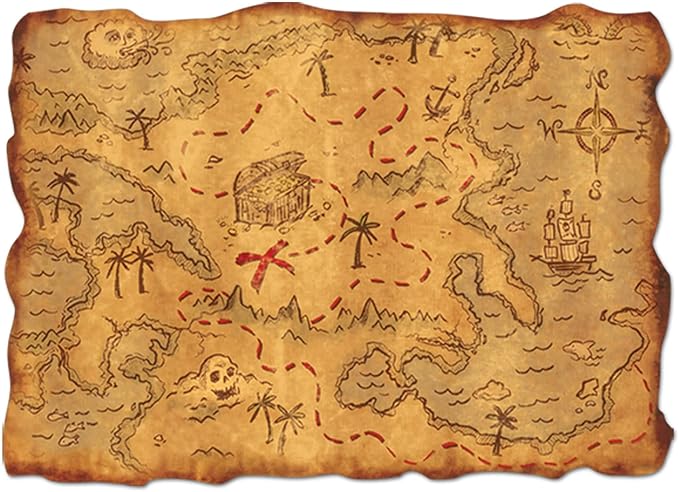
5. Treasure Hunt
Treasure Hunts are interactive and adventurous games that engage children’s problem-solving skills. Kids love the thrill of searching for hidden treasures, making it an exciting choice for parties, especially outdoors.
This game can be customized to various themes and age groups, making it versatile and adaptable for different occasions.
Pros:
- Great for outdoor settings and encourages exploration.
- Promotes problem-solving skills, teamwork, and critical thinking.
- Treasure hunts promote physical activity as kids run around searching for clues and treasures.
Cons:
- Requires more preparation and setup, but the effort is often worth it for the fun.
How to Play:
- Firstly, decide on a location (backyard, park, indoors).
- Choose a theme (pirates, explorers, detectives).
- Gather small toys, treats, or themed items to serve as treasures. You can also include clues or riddles for an added challenge.
- Write clues that lead to different locations where the treasures are hidden.
- For younger kids, use simple hints or pictures; for older kids, you can create riddles or puzzles to solve.
- Hide small toys or treats around the party area.
- Provide kids with a list of clues or items to find.
- The first to find all the treasures wins. You can have teams or let them compete individually.
Read More: Top 5 Best Card Games for 7-Year-Olds: Fun and Educational Picks!
Conclusion
These best party games for kids are sure to create memorable moments at your next gathering. They encourage interaction, creativity, and most importantly, fun! Consider including a mix of active and calm games to keep the energy balanced.
For more exciting games, check out The World Game for awesome options to make your party even more enjoyable!