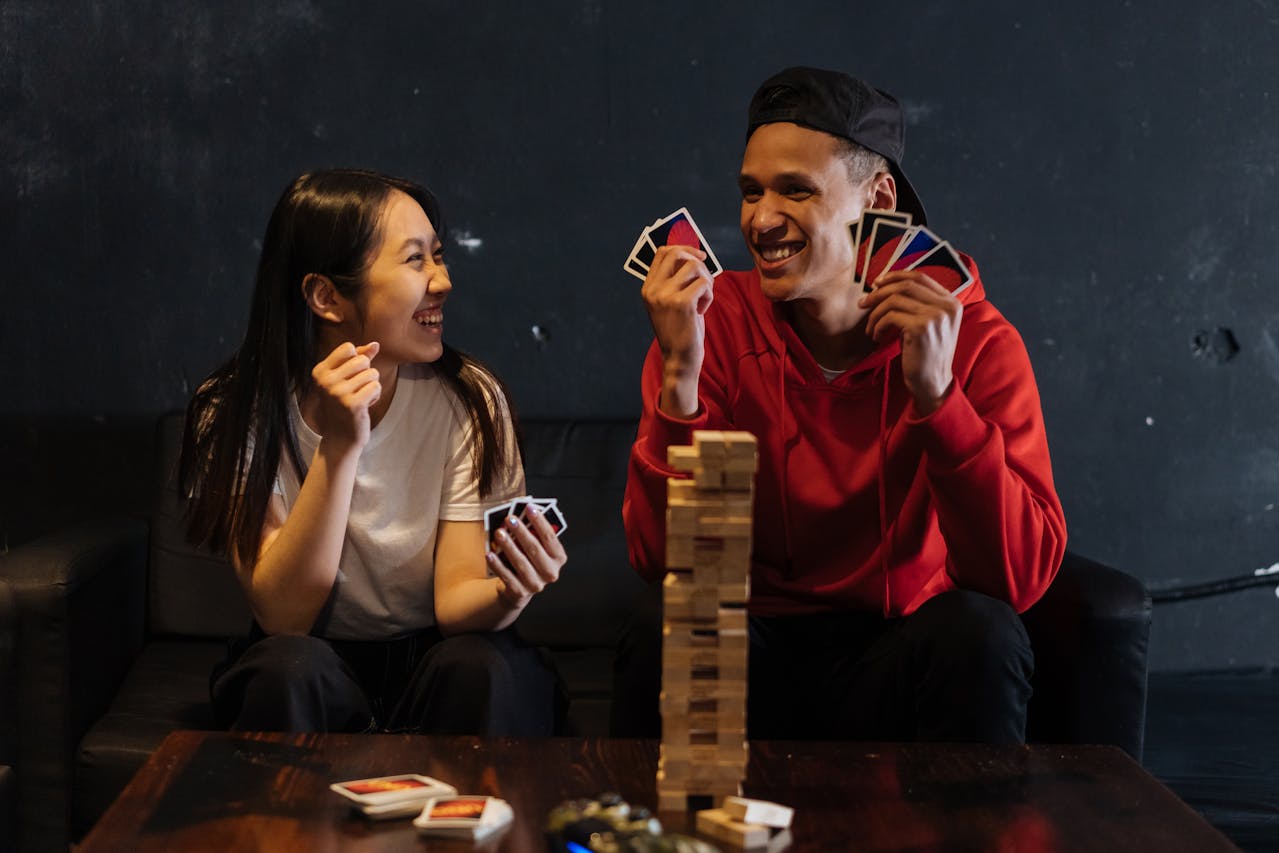
Finding engaging and educational card games for homeschooled kids can enhance their learning experience while keeping them entertained. Here’s a list of the top five card games perfect for 10-12-year-olds, ideal for homeschooling environments. These games foster critical thinking, teamwork, and fun!
Finding engaging and educational card games for homeschooled kids can enhance their learning experience. If you’re looking for the best card games for homeschooled 10-12-year-olds, you’re in the right place.
These games provide fun hours and encourage critical thinking, teamwork, and important social skills. Here’s a list of the top 5 card games that are perfect for 10-12-year-olds, and ideal for homeschooling environments.
5 Best Card Games for Homeschooled 10-12 Year Olds
1. The World Game
The World Game is an innovative and educational card game. It is designed to enhance players’ understanding of geography, culture, and global awareness. Perfect for homeschooled children aged 10-12.
This game transforms learning about the world into a fun and interactive experience. It can be played in groups, making it an excellent addition to family game nights or classroom settings.
This game includes a map of 194 countries. It’s suitable for all knowledge stages and can be used as flashcards or trivia. The game offers an educational focus on geography.
Additionally, it encourages teamwork and collaboration. The game promotes critical thinking, social skills, and flexibility.

Pros:
- Engages kids in geography and cultural awareness.
- Encourages teamwork and collaboration.
- Suitable for various group sizes.
- Engaging gameplay.
Cons:
- It may require some prior knowledge of geography.
How to Play:
- Divide players into teams. Each team should have a set number of players (ideally 3-5).
- Shuffle the question cards and place them in a draw pile.
- Teams take turns drawing a card from the top of the pile.
- One player from the team reads the question aloud.
- Players work in teams to answer questions related to geography and culture.
- Each correct answer earns points for the team. If the team answers correctly, they earn points.
- The team with the most points at the end wins!
2. Apples to Apples
Apples to Apples is a classic party game that brings laughter and creativity to game night. It is designed for ages 12 and up. It is perfect for families, friends, and even classrooms. The game encourages players to think outside the box.
The game consists of Red Apple Cards and green Apple cards. Red apple cards contain nouns like people, places, and things, and Green Apple Cards, feature adjectives like “funniest,” “most ridiculous,” or “most likely to succeed.”
The game has around 400 red apple cards and 200 green apple cards. It also has a booklet outlining rules and a storage box for easy transport.
This game is perfect for homeschooling because it enhances language skills. It also encourages social interaction and is flexible. This game suits various homeschooling activities, promoting vocabulary, word associations, and communication in a fun and relaxed environment.

Pros:
- Promotes creativity and humor.
- Easy to learn and play.
- Suitable for large groups.
Cons:
- Some cards may be inappropriate for younger players.
- The game can become repetitive after multiple rounds.
Buy Apples to Apples on Amazon
How to Play:
- Each player is dealt a hand of seven red apple cards.
- One player serves as the judge and draws a green apple card with an adjective.
- Other players submit the red apple cards that they think best match the adjective.
- The judge picks the funniest or most fitting red apple card.
- The player who submitted the winning card receives an “apple” token. The role of the judge rotates clockwise, and the game continues until a player reaches a predetermined number of apples to win.
3. Organ Attack
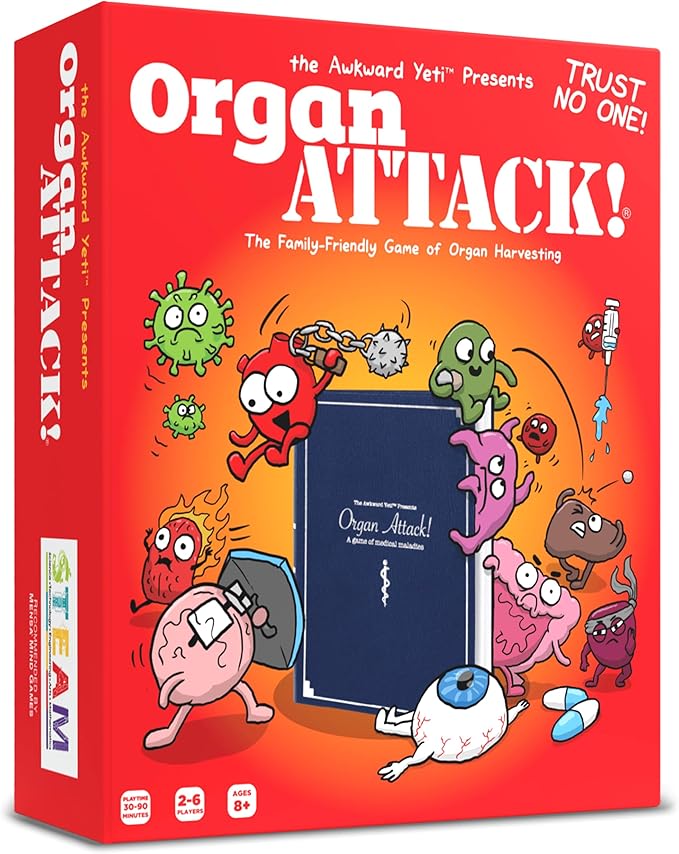
Organ Attack is a fun and educational card game. It teaches kids about human anatomy in an engaging way. This game is designed for players aged 10 and up. Additionally, this game combines humor and learning. Therefore, it is a perfect fit for homeschooling environments.
With its unique theory, Organ Attack keeps kids entertained while they explore the functions and importance of various organs in the human body. It is suitable for kids, teens, and adults.
The game involves players removing their opponents’ organs before they can remove their own. It is suitable for various occasions, including family games, parties, and camping.
The game features organ cards, action cards, and player boards. It also includes a comprehensive guide for effective gameplay and an optional dice for added chance.
Organ Attack promotes an understanding of human anatomy, critical thinking skills, and social interaction.
Pros:
- Fun and educational, teaching kids about human anatomy.
- Quick gameplay keeps kids engaged.
- Suitable for multiple players.
Cons:
- Some kids may find the concept of organ removal a bit gross.
- Some players may require some guidance.
How to Play:
- Players start with a set of organ cards.
- The goal is to keep your organs intact while removing organs from opponents.
- Use action cards strategically to defend your organs or attack others.
- The last player with organs remaining wins!
4. Elimino
Elimino is a fast-paced card game. It is designed for ages 11 and up. This game is perfect for family game nights and gatherings with friends. The Elimino game was created by two sisters.
The game offers a blend of strategy, luck, and social interaction. This makes it an engaging option for homeschooled kids aged 10-12. Players will find themselves involved in a thrilling experience as they use strategies to eliminate their opponents while keeping their cards safe.
Elimino combines fun with critical thinking, promoting problem-solving skills among players. The game’s engaging nature encourages players to interact, strategize, and think on their feet. It is a perfect addition to any homeschooling curriculum.

Pros:
- Engaging gameplay that encourages strategic thinking.
- Good for older kids and teens.
- Easy to learn.
- The game promotes teamwork and communication.
Cons:
- May be too complex for younger players below the age limit.
- Some players may find it frustrating to be eliminated early in the game if they are targeted by others.
Buy Elimino on Amazon
How to Play:
- Each player starts with a set number of cards.
- Players take turns drawing and playing cards to eliminate opponents.
- Use strategy to outplay your opponents while defending your position.
- The last player remaining wins!
5. SUSSED
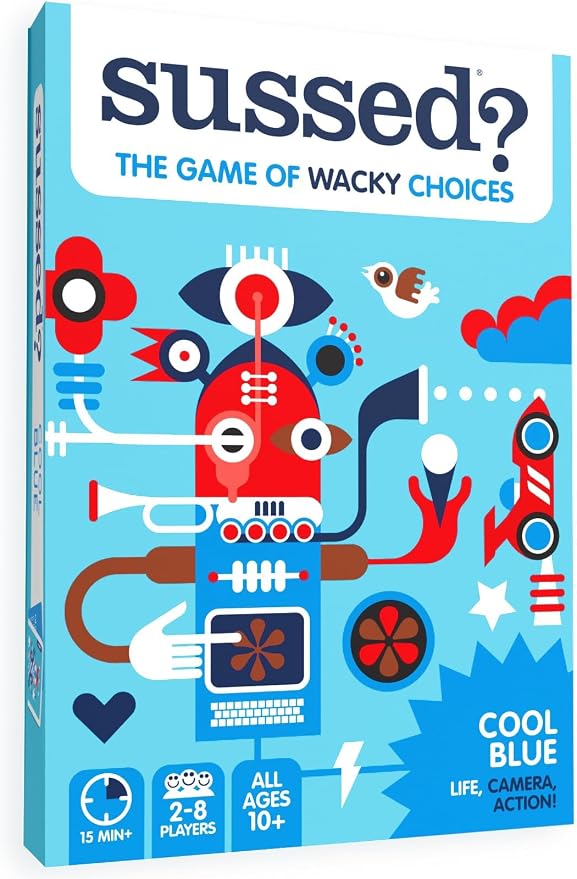
SUSSED is a delightful party game. It is designed for players aged 10 and up. It encourages players to think creatively and engage in fun conversations while trying to guess what their friends and family are thinking.
The game is a fantastic choice for developing communication skills and understanding between players. It is ideal for homeschooling settings where social interaction is vital.
Moreover, SUSSED can be a wonderful tool for improving vocabulary and language skills, as players express their thoughts and ideas throughout the game.
This game features 110 cards, over 200 questions, and 650 answers. It’s portable and can be played anytime, anywhere. It boosts social skills, strengthens relationships, and shares laughs. Additionally, it is a great companion for game nights, road trips, and social gatherings.
Pros:
- Encourages conversation and social interaction.
- Fun for groups of friends or family.
- Easy to learn and play.
Cons:
- It may not be suitable for very competitive players.
Buy SUSSED on Amazon
How to Play:
- Players take turns asking questions to guess what others are thinking.
- Use deductive reasoning and clues to figure out answers.
- Points are awarded for correct guesses, and the player with the most points at the end wins!
Read More: Top 5 Best Party Games for Kids | Fun & Easy Ideas
Conclusion
Card games are a wonderful way to promote learning and interaction among homeschooled 10-12-year-olds. They foster essential skills while providing entertainment. Among these top five, The World Game stands out for its unique approach to geography and culture, making it a must-have in your game collection.
Incorporating card games into the homeschooling routine is a wonderful way to promote learning and interaction among 10-12-year-olds. These games develop essential skills such as critical thinking, teamwork, and creativity while providing endless entertainment.
Among these top 5, The World Game stands out for its unique approach to geography and culture. It is one of the best card games for homeschooled 10-12-year-olds. So gather your family and friends, and enjoy these fantastic card games that will not only entertain but also educate!